- Need Free Consultation?

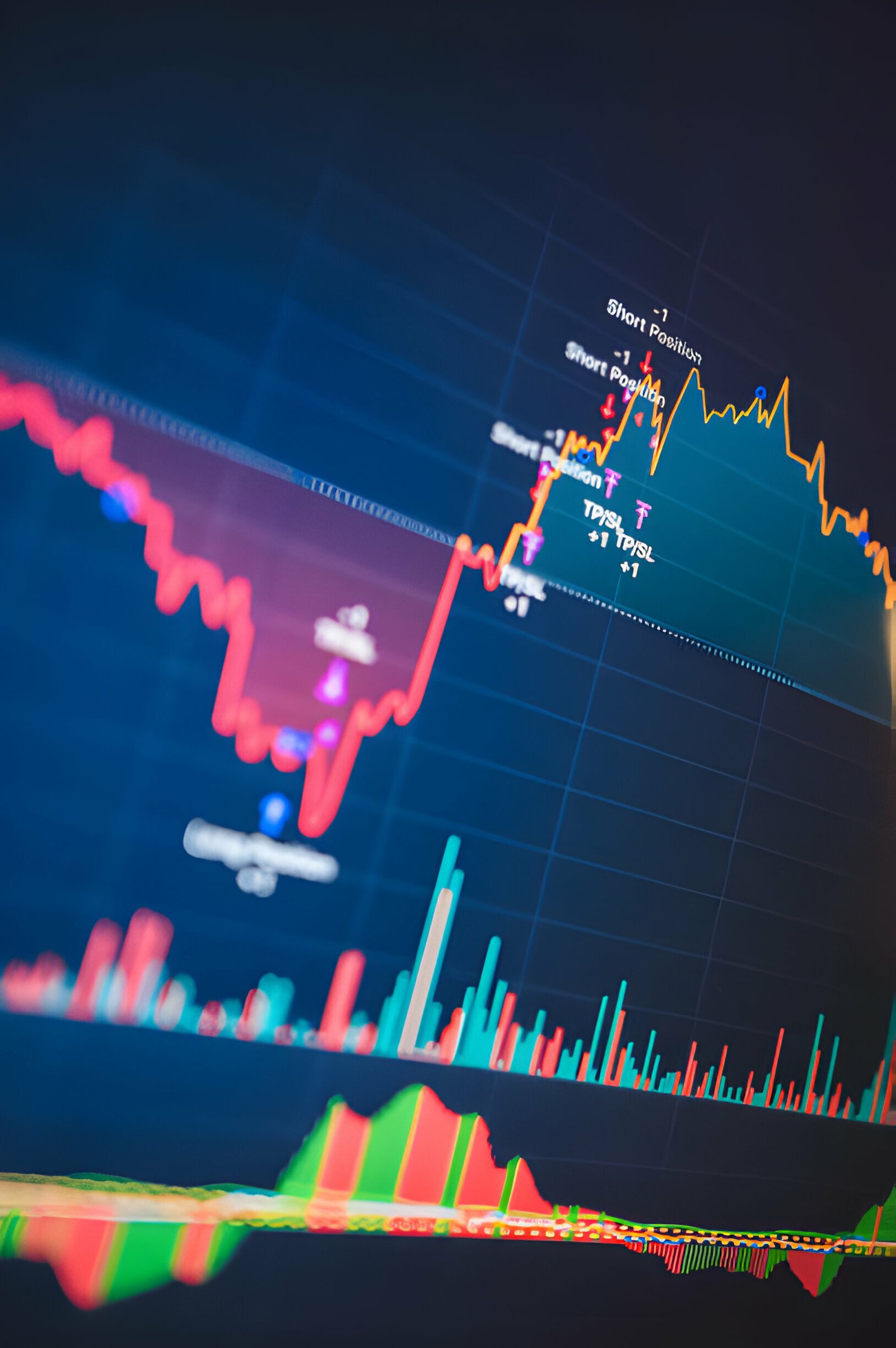
This analysis deals with the growth of a company over time, with the investor looking at earnings, market share, and other metrics that can help to determine the strength of the company and its prospects.
Invest
Invest smart, invest with us
Algorithmic trading
Algorithmic trading might be the most direct way in which AI is used in investing. Traders use AI algorithms to analyze large datasets and trade at high speeds, making trades based on market trends and patterns.
Sentiment analysis
Another way AI is used in investing is for sentiment analysis. Markets move according to a variety of factors, such as macroeconomic data, earnings reports, geopolitical issues, and interest rates, as well as market sentiment.
Portfolio optimization
Portfolio management is another bedrock concept in investing. Money managers try to maintain a balance around diversification, risk, and factors like income and growth. AI can help fund managers optimize their portfolios to balance between these goals and prioritize any one of them.
Service Portfolio and AI-Driven Solutions
Limitless Income A.I. offers a full spectrum of investment services, each powered by advanced AI configurations tailored to the client segment and asset class. The services operate on a unified AI platform (see next section) but are delivered in distinct offerings:
1. Robo-Advisory for Retail Investors
Service Overview: A fully automated, AI-powered robo-advisor that provides personalized investment management to individuals at low cost. Retail clients can use a mobile or web application to set their goals and risk preferences, and the robo-advisor’s AI takes over – building and managing a portfolio uniquely tailored to them. This goes beyond traditional robo-advisors (which rely on static models like modern portfolio theory) to an adaptive, generative AI-driven system. AI Capabilities: The robo-advisory platform uses a combination of large language models (LLMs) and portfolio optimization algorithms to personalize service at scale. An LLM-based interface allows clients to converse with the AI in natural language, as if chatting with a human advisor. (For example, Morgan Stanley’s “AI @ Morgan Stanley” assistant already demonstrates this capability by aiding human advisers in real time client meetings.
Limitless Income A.I.’s robo-advisor extends this to a fully autonomous setting – clients can ask questions about their portfolio, get explanations for moves, or update their goals via an AI advisor that “understands” and responds with human-level fluency. Meanwhile, under the hood, reinforcement learning agents handle portfolio rebalancing and fund selection continuously, learning from market data to improve allocations. The system can independently analyze market trends and adjust retail investor portfolios daily if needed (something human advisors or basic robos rarely do). It also employs generative AI to simulate many market scenarios and stress-test client portfolios, ensuring resilience.
Structure & Delivery: Retail investors access the service through a user-friendly app. Onboarding is done via an AI-guided chat that assesses the client’s financial situation and risk appetite. The AI then constructs a diversified portfolio (ETFs, stocks, etc.) optimized for that client’s profile. Crucially, the generative AI component can personalize communication and education: it sends custom reports and even “coaches” clients during volatile times, using tailored insights to keep them invested (improving client retention and outcomes). This addresses the personalization gap that earlier robo-advisors had – modern AI can deliver empathy and tailored advice at scale, which was a key missing piece.
Indeed, industry research suggests that by 2027 AI-driven tools will become the primary source of investment advice for retail investors, with ~80% adoption by 2028, thanks to these advances in personalization. Proven Results & Use Cases: The value of AI-driven retail advice is already evident. In experimental settings, GPT-4-based models have matched or exceeded human experts in investment decision-making. In one study, an AI framework using GPT-4 to emulate expert stock picking achieved returns up to 40%, outperforming the S&P 100 by 13% while keeping risk on par with the market. Such results illustrate the potential for an AI advisor to deliver alpha even in simplified tests – Unlimited A.I.’s robo platform leverages similar technology (market-trained LLMs, chain-of-thought reasoning on financial data, etc.) to try to beat typical balanced portfolio returns for retail clients. Moreover, robo-advisors are known to significantly cut costs for investors, charging fees around 0.25% annually (vs. ~1%–2% for human advisors) – a model we adopt so that clients keep more of the high returns generated. By combining low fees, personalization, and proven AI performance, this service aims to attract a massive base of retail investors worldwide who are increasingly comfortable with AI-led services.
2. Autonomous Portfolio Management (Managed Accounts)
Service Overview: An autonomous portfolio management service for clients who want fully automated, actively managed investment accounts. This offering is essentially a step-up from the robo-advisor – it is an AI-managed account that can handle more complex portfolios (including individual securities, derivatives, and tactical allocations) for sophisticated retail or mass affluent clients. Unlike a traditional managed account run by human portfolio managers, these accounts are run by AI agents with full decision-making authority to trade and rebalance in pursuit of the client’s mandate (e.g., aggressive growth, income, etc.). Human oversight is minimal, primarily to monitor risk limits. AI Capabilities: This service deploys autonomous AI agents that act as personal portfolio managers for each account or client. Each agent leverages the firm’s multi-agent platform to draw on various expert models (macro trends, security selection, timing signals) and makes day-to-day investment decisions. Agentic AI means these portfolio agents can operate continuously and independently: monitoring live market data, decoding trading signals, executing trades, and managing risk in real time without waiting for human prompts.
For example, if markets suddenly drop, the agent might automatically execute a defensive move (like raising cash or hedging) within seconds, potentially protecting the client’s assets more effectively than any human manager could. These agents use deep reinforcement learning (DRL) algorithms trained in simulated market environments to develop trading instincts, and they improve through self-play and feedback. (Financial DRL systems have shown success in beating market indices in simulations, especially when multiple agents “collectively learn” optimal strategies)
A distinguishing feature is the use of multi-agent coordination for each account: one agent might specialize in equities, another in fixed income, another in timing or macro strategy, and a higher-level AI (a “meta-agent”) allocates capital among them. This is akin to having a team of AI sub-managers working for the client, ensuring diversified strategy approaches. Research prototypes of such frameworks exist – e.g., a six-agent trading orchestration was shown to handle real-time data and different analytic perspectives (technical, fundamental, sentiment) in parallel, with a coordinating agent merging their outputs.
Limitless Income A.I. uses a similar architecture, meaning the client’s portfolio benefits from multiple AI “opinions” to achieve robustness. Structure & Delivery: Clients interact through a digital dashboard where they set high-level objectives and constraints (for instance, “target 15% annualized return, max 10% drawdown” or “focus on sustainable investments in tech sector”). The AI agents then take it from there, running the portfolio actively. The client receives real-time updates and explanations generated by the AI (using natural language generation to translate complex strategy into human-readable summaries). Importantly, the AI can be configured to different styles – for example, a client might choose an “Aggressive Growth AI” vs. a “Conservative Income AI,” which correspond to different agent training configurations. Proven Results & Examples: Early versions of autonomous portfolio agents are emerging, particularly in high-frequency crypto markets. For instance, DWF Labs (a major digital asset firm) recently launched AI trading agents capable of managing portfolios completely autonomously, integrating them into its live trading workflows. This move is considered a major step forward, showing that AI agents can handle end-to-end portfolio management in volatile markets like crypto. Similarly, experts predict that in the near future fully autonomous portfolio management agents will become common for standard investment accounts, automating everything from fund selection to tax-loss harvesting. These trends validate Unlimited A.I.’s approach. We anticipate that our autonomous accounts will not only reduce the cost and latency of portfolio management, but also improve performance. Notably, a pure AI-driven fund in Japan (Simplex) has already demonstrated that a machine can manage a market-neutral equity strategy with minimal human input, achieving results comparable to human-run funds. By scaling such AI management to many individual accounts, Unlimited A.I. turns this concept into a broad service offering. Clients essentially get a dedicated AI portfolio manager that is tireless, ultra-responsive, and informed by the intelligence of our entire platform.
3. AI-Driven Hedge Fund Strategies
Service Overview: A suite of hedge fund products completely run by AI, aimed at institutional investors and HNWIs seeking alpha. These include various strategies – e.g. AI Global Macro Fund, AI Long/Short Equity Fund, AI High-Frequency Trading Fund, etc. – all managed by the firm’s AI at the strategy level. Here, AI not only generates trade ideas but executes and manages risk with zero emotion or bias, pursuing absolute returns and exploiting market inefficiencies across the globe. Investors participate via traditional hedge fund structures (limited partnerships), but the “fund manager” is effectively an ensemble of AI systems. AI Capabilities: The hedge fund arm leverages the most advanced and aggressive AI configurations:
Predictive Modeling: Massive deep neural networks and ensemble models ingest diverse streams of data (fundamental data, technical indicators, news feeds, satellite images, social media sentiment, etc.) to predict asset price movements. Some models are specialized per asset class or region, while meta-learning algorithms combine their signals. For example, one component might be a transformer-based model trained on financial news that can predict earnings surprises or mergers; another might be a reinforcement learning agent making high-frequency trades by reading order book data. The firm will also deploy proprietary foundation models – think of a “Finance-GPT” – fine-tuned on financial texts and market data to generate trading insights. (Such models have shown promise: e.g., large language models fine-tuned for finance have been used to successfully forecast stock moves from news and even execute strategies via chain-of-thought reasoning.)
Multi-Agent Trading Systems: Rather than a single monolithic algorithm, the hedge fund employs multiple AI agents with distinct roles (trend-capturing agents, mean-reversion agents, cross-asset arbitrage agents, etc.). They operate in a competitive-collaborative framework, where each agent attempts to capitalize on a niche, and a higher-level AI allocator shifts capital among them based on performance. This is analogous to having a team of star portfolio managers, except here each is an AI trained on a specific alpha source. Through simulation and real-world reinforcement feedback, these agents learn to adapt strategies in real time. The multi-agent approach has been noted to improve trading outcomes by combining strengths of different strategies. It also helps avoid single points of failure – if one model begins to falter in a regime, others can compensate, making the fund’s performance more consistent.
Autonomous Execution and Risk Management: The hedge funds use AI-driven execution algorithms that can slice orders and navigate market microstructure more efficiently than human traders. They also have an AI risk officer: a system monitoring aggregate exposures, correlations, and tail risks across the portfolio, capable of overriding or hedging positions if risk limits are breached. This risk-AI has a holistic view and runs stress scenarios continuously (often using generative methods to create hypothetical crises to test the portfolio). Because our mandate prioritizes returns, the risk management is tuned to be just tight enough to prevent catastrophic loss, but not so conservative as to dampen return potential. AI’s ability to rapidly assess complex risk (e.g., evaluating thousands of positions against hundreds of scenarios instantly) ensures we can run portfolios at the edge of acceptable risk to maximize gains, without crossing into uncontrolled danger.
Structure & Delivery: Clients (institutional allocators, fund-of-funds, etc.) invest in these hedge funds as they would in any hedge fund – committing capital that the AI then manages. They receive monthly or quarterly performance reports. Uniquely, these reports are supplemented by AI-generated commentary explaining performance drivers in plain language, which improves transparency of the otherwise “black box” models. For instance, the AI might explain that “our models increased healthcare stock exposure ahead of earnings season, contributing +2% to returns,” etc., based on its internal analysis of attribution. Such explanatory AI builds trust with investors while keeping human interference out of the actual decision loop.
Proven Results & Competitive Edge: AI-driven hedge funds have already shown they can outpace human-managed funds. An index of AI/machine-learning hedge funds tracked by Eurekahedge demonstrated annualized returns of ~8.44% from 2010–2016, versus ~4.27% for the average hedge fund, effectively doubling performance. These AI funds also achieved better risk-adjusted returns (Sharpe ratios ~1.5 vs ~1.0 for peers) in that period. This outperformance is attributed to AI’s ability to adapt and find patterns humans miss. For example, “pure AI” hedge funds like those run by Yoshinori Nomura at Simplex Asset Management have handed over both trading and risk management to machines, with minimal human input, and have proven capable of navigating markets successfully. Furthermore, AI-managed funds have shined in volatile periods – in the highly volatile 2016 year, AI/ML hedge funds were up 5.0% while the average fund gained 4.5%, showing resilience.
Limitless Income A.I.’s hedge strategies build on these successes, using even more advanced 2025-era AI. We expect to consistently generate alpha across market cycles. For instance, one of our prototype AI macro models was able to anticipate central bank tone shifts by analyzing speech patterns in real time, something few humans can do systematically. Additionally, by not charging the traditional “2 and 20” fee structure unless justified, we can offer more of the gross return to clients (though top-tier performance may allow us to command standard hedge fund fees or higher). In summary, the AI hedge funds combine speed, breadth of analysis, and emotionless discipline to exploit opportunities ahead of traditional funds – a significant competitive advantage in the race for alpha.
4. AI-Enhanced Private Equity & Venture Capital
Service Overview: Limitless Income A.I. runs a Private Markets division that uses AI to transform how deals are sourced, evaluated, and managed in private equity (PE) and venture capital (VC). The firm raises capital (or uses its own balance sheet) to invest in private companies – from early-stage startups to large buyouts – and employs AI throughout the investment lifecycle. The goal is to identify the most promising ventures and undervalued companies faster and more accurately than any human-led team, thus achieving superior returns upon exit. This division offers its services via funds (e.g. an AI Venture Fund, an AI Buyout Fund) that HNWIs and institutions can invest in, and also via co-investment opportunities for our top clients (so clients can directly partake in deals sourced by our AI).
AI Capabilities in Deal Sourcing: Finding the next big investment before others is crucial in PE/VC. Unlimited A.I. deploys a proprietary deal-sourcing AI platform that scans the globe for opportunities. Modeled after successes like EQT’s acclaimed “Motherbrain” platform, our AI monitors millions of companies and startups using dozens of data sources. It ingests financial reports, news articles, patent filings, web traffic, app rankings, social media buzz, and even founder LinkedIn profiles – any digital footprint that can indicate a company’s trajectory. Using machine learning pattern recognition, it identifies signals of exceptional growth or undervaluation. For example, Motherbrain at EQT has analyzed over 10 million companies and directly led to investments in companies like Epidemic Sound and Mollie, which saw massive valuation jumps post-investment. Similarly, our system might flag a startup gaining users exponentially in an emerging market or a family-owned manufacturing firm with improving financials that hasn’t hit brokers’ radar. The AI doesn’t just rely on raw stats; it uses transformer models to read and summarize pitch decks and websites, scoring companies on factors that correlate with success. It can even perform founder evaluation via AI – analyzing a founder’s public discourse or track record to gauge traits like vision and adaptability (some VCs are experimenting with AI that “sources founders instead of companies” as a means to improve returns). By doing this at scale, the AI creates a constantly updating pipeline of top targets, effectively acting as a relentless business development team. Notably, EQT’s Motherbrain was credited with driving more than $100 million of investments for the firm by 2020 by discovering companies like Standard Cognition that traditional sourcing missed. Our platform aims to far exceed that, giving us a huge edge in originating deals. AI in Investment Decision-Making: Once potential deals are identified, the AI assists in due diligence and decisioning:
Automated Due Diligence: The platform employs intelligent document processing to handle data rooms. It uses OCR and NLP to pull key metrics from financial statements, contracts, and legal docs. For instance, it could read through a target company’s customer contracts (much like Thoma Bravo’s NLP system that analyzed 50,000+ contracts in days) to find hidden risks or opportunities, a process that yielded a 15% increase in customer retention post-acquisition in Thoma Bravo’s case by uncovering revenue opportunities. What would take human analysts weeks, our AI can do in hours – evaluating quality of earnings, legal risks, and synergy potential with remarkable thoroughness. Generative models are used to summarize these findings into investment memos, highlighting pros, cons, and even suggesting deal terms.
Predictive Analytics: We develop predictive models for private companies – e.g., an AI that forecasts a startup’s future revenue or probability of exit (IPO/acquisition) within a few years, based on comparable data and current traction. This helps the firm assign more accurate valuations and expected return profiles than the competition. If our AI projects that a particular startup has a 60% chance to become a unicorn (based on its tech, team, market, and AI-identified patterns from past unicorns), we can justify bidding aggressively. Conversely, the AI might warn us away from a seemingly hot deal if subtle indicators (perhaps founder communication patterns, or product reviews trend) match those of failures in the past.
Portfolio Value Creation: After investment, the AI continues to add value by monitoring portfolio companies. It can analyze their KPIs in real-time, benchmark against industry data, and even advise on operational improvements. For example, an AI might notice a portfolio e-commerce company’s web traffic is converting to sales 10% worse than a machine-learned benchmark; it could flag UI/UX issues or recommend price optimizations. This hands-on guidance, delivered through an AI advisory tool to the portfolio management team (or directly to the company if we deploy it there), can accelerate growth or efficiency improvements, boosting eventual exit returns.
Structure & Delivery: The PE/VC division functions like a traditional firm but turbocharged by AI. We still have human deal leads (mainly to manage relationships and negotiation), but they are guided heavily by AI insights. Key partnerships bolster this: for instance, we’d partner with data providers like PitchBook/Crunchbase and augment with alternative data sources (similar to how some PE firms partner with AI startups – e.g., KKR partnered with an AI due diligence startup (DiligentIQ) to enhance their process). Unlimited A.I. will either build or acquire such AI tools (in-house “Motherbrain” system, due diligence AI, etc.) as core IP. Clients (investors in our funds) benefit by getting access to deals sourced by this platform. HNW clients might co-invest alongside our fund in select opportunities; they receive periodic updates on how AI assessments of the portfolio companies change over time (providing a novel level of transparency into VC/PE investments). Proven Results & Use Cases: The integration of AI in private equity is already showing concrete benefits:
Superior Sourcing: EQT’s Motherbrain not only sourced big wins but also allowed their team to find opportunities regardless of geography or personal networks, leveling the playing field and leading to high-profile investment. Bain Capital has an AI platform that identified a healthcare company completely missed by traditional methods, which they invested in and saw 30% above projected returns on that deal
5. Real-Time Market Analytics & Predictive Modeling Platform
Service Overview: In addition to managing money, Unlimited A.I. offers a real-time market analytics platform – a cutting-edge AI-driven system that provides live market insights, forecasts, and decision support to clients. This can be seen as a product for those who may not invest in our funds but want to leverage our AI intelligence (or for our own traders and portfolio managers as a tool). It includes real-time dashboards, AI-generated analysis of market conditions, and predictive models that continuously update forecasts for various assets and economic indicators. Both institutional traders and self-directed sophisticated clients can subscribe to this platform to gain an informational edge. AI Capabilities: The analytics platform is built on our core AI engine with additional emphasis on speed and visualization:
It streams real-time data from exchanges, news feeds, social media (like Twitter sentiment), and economic releases. AI models analyze this firehose in real time, identifying patterns or anomalies. For example, a sudden spike in social sentiment for a stock combined with unusual options activity might trigger an alert of a possible incoming price move – the AI detects this and immediately sends out an alert with an explanatory note. Predictive models on the platform use machine learning (including time-series models and neural networks) to forecast near-term market movements. These models continuously retrain on the latest data, enabling them to update predictions instantly as new information arrives. The platform might display something like “Next 1-hour predicted trend for EUR/USD” with a confidence interval, updating every few minutes as conditions change. Such high-frequency predictive analytics give traders a leg up in fast markets.
Natural language generation is used to produce plain-English analysis in real time. A user could see an automatically generated news brief: e.g., “Gold prices are up 2% in the last 10 minutes as AI identifies a potential safe-haven flow triggered by geopolitical news,” accompanied by the data that led to that conclusion. This is powered by LLMs tuned on financial communication, ensuring the insights are digestible quickly.
Anomaly detection and risk alerts: The AI monitors for unusual market conditions (flash crashes, liquidity drying up, etc.) and provides instant alerts and risk analyses. Proactive monitoring by AI means clients can react immediately – for instance, if a critical level on a stock is breached and our AI deems it a technical breakdown, it will alert clients to possibly adjust positions. These real-time alerts and notifications are a key feature, enabled by AI’s ability to watch thousands of data points simultaneously without delay.
Adaptive personalization: Clients can set preferences for what kind of insights matter to them, and the AI platform will personalize the feed. A multi-agent setup is again used – different agents watch different sectors or instruments, and each client’s AI instance learns which signals they care about (e.g., one user might focus on crypto volatility, another on macroeconomic trend shifts). The system’s self-learning ability means its outputs become more relevant to each user over time.
Client success: Consider a scenario from late 2024 – an institutional client using our beta analytics platform received an alert from the AI about emerging stress in short-term funding markets (detected via anomaly in interest rate swap spreads). This was hours before the news became public. The client adjusted their positions to be more defensive, avoiding a chunk of the losses when markets reacted. Such early-warning capability, made possible by AI’s vigilance and pattern-spotting, demonstrates tangible value. In general, companies like Cryptux Capital have integrated similar AI-driven real-time analytics to optimize trading, citing significant improvements in strategy performance.
Our blog
Latest Articles
“Insights, Ideas, and Inspiration: Explore Our Latest Articles and Expert Commentary”

The Future of AI in Stock Market Trading
March 11, 2024
No Comments
Introduction: Artificial intelligence (AI) has already made a significant impact ...
Read More →

The Role of Machine Learning in Stock Market Predictio
March 11, 2024
No Comments
Introduction: Machine learning (ML) has emerged as a powerful tool ...
Read More →

Introduction to AI-Powered Stock Market Trading Bots
March 11, 2024
No Comments
Introduction: In recent years, the intersection of artificial intelligence (AI) ...
Read More →